9 May 2013 – Designing & Building an In-ground Swimming Pool

Ian, G3ORG started by saying, ‘why, where, and how?’  The interesting part was the ‘how’.

Having chosen a high-quality fibreglass-reinforced vinyl preformed pool shell, he had to provide the hole for it. Not ‘just a hole’, but a perfect opening in the ground that would provide the correct support for the shell and the weight of the water along with the pipe work for the water in and out, drainage and motor housing for the pool cover. 

The finished product looked first class. But the project doesn’t finish there.  Behind the scene are pumps, valves, and all sorts of electronic controls to keep the water at the correct level, the correct pH and the correct amount of chlorine. Ensuring the pool is useable for more then just a few weeks in summer, there is also an air source heat pump, an efficient method of warming the water without running up large heating bills.

It looks a very beautiful and useful installation

Pump room                                                Ian’s Pump Room

2 May 2013 – Local Astronomy History and how the Bedford Planetarium was built

Following on from our visit to the Bedford School Observatory and Planetarium, Mr. Linton Guise and Mr. Philip Stone came to the club to tell of the history behind those who were instrumental in bringing astronomy to Bedford during the early 1800’s. The school’s observatory is named in honour of Charles Piazzi Smyth, who in 1846 was appointed Astronomer Royal for Scotland.

 Mr. Philip Stone then continued with the details of building the observatory which started with a massive cement base for the telescope as well as foundations for the brick building itself, then the construction of the glass fibre dome along with the mechanism used to turn it. Details followed as to how he made the star projector for the planetarium since none were available to fit the size of the building intended for it’s use. 

 Members were amazed at the complexity and ingenuity that went into this project!

The evening climaxed with a birthday presentation to Victor,G3JNB who was celebrating his 80th.  Bryan, M0BIK brought a cake which Kate, a work colleague, had made on the club’s behalf. The top was decorated with a 6L6 circuit, complete with vintage symbols!

Victors cakeleft, Victor G3JNB,   right Paul, G1GSN

25 April 2013 – The Spring Junk Sale

Junk Sale; what else can be said. So many things that once cost vast amounts of money, now mostly unwanted, unneeded and mostly superseded by more modern equipment that will also be junk in an even shorter time.  Still, the money made certainly helps support our club!  

18 April 2013 – Visit Bedford School Planetarium and Observatory

Meade

Club members were guests of Mr. Linton Guise and the Bedford School Planetarium and Observatory last evening.  Although the afternoon was wet and windy, by the time we had come out of the planetarium, the sky was completely clear and dark.  From the 5m domed observatory which houses the 16 inch computer controlled Meade telescope being driven by Phil, we could see Jupiter and three of it’s moons, as well as close ups of our moon.

Outside the dome was another smaller telescope trained on the double stars, Mizar and Alcor in the ‘tail’ of Ursa Major which looks like a single star, unless you have excellent eyesight. Earlier, while we were in the planetarium, Mr. Guise explained that these two stars were used by the Romans to test the eyesight of those wishing to be centurions and mused whether it would be an advantage to see the separation or not. 

 On 2 May, Mr Guise will visit the club to talk about the history of local astronomy and how the Observatory and Planetarium were built.  

Group  

11 April 2013 – An Introduction to Gliding

Roger Castle-Smith

It was great to see some blue skies and sunshine, albeit slides in a presentation on gliding in New Zealand. 

Roger Castle-Smith detailed the major types of gliders starting with the Slingsby first flown in 1944, up to the modern 31M wingspan with an amazing glide ratio of 72:1  Of course, only a few of those have been made, the more available being the 25M wingspan with a very useable glide ratio of 58:1.  

Roger told of the modern instruments available for gliders. Apart from the usual airspeed indicator, altimeter, compass, bank and slip, was the vertical speed indicator which showed when the glider was in rising air, or the opposite. Also useful in the cockpit are the glide computer, moving map display and flight alarm. The location of restricted flying areas are detailed on the aero charts.  Roger then explained how the gliders get into the air.  The first method detailed was the winch utilizing about a half mile of cable to tow from the ground.  The club Roger is associated with has mounted four reels side by side on a vehicle which results in more launches and less time in retrieving the cable. Gliders can also be launched by aero tow, which results in a start from a greater height.

 Roger detailed some records made in gliding, such as the highest flight of 50,671 feet in 2006, also the longest journey without landing of 1,554 Miles in 15 hours.

  Roger then showed a video of a gliding flight from Omarama Gliding Club, New Zealand to Mt. Cook, and back, but instead of landing on the airfield, the pilots chose to fly to the western side of the island and land on a beach. The entire flight was over mountains and deep valleys. 

glider in NZ   

4 April 2013 – Setting up a Community Radio Station

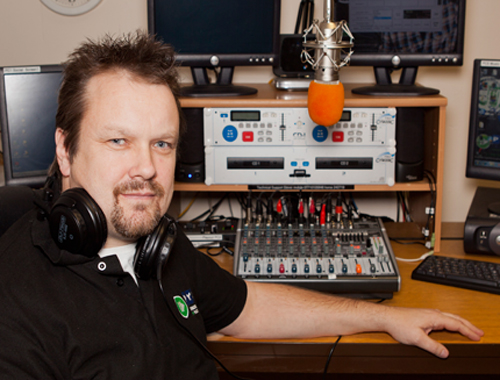
Steve at the mic

The station in question is the Peterborough Youth Radio station and last evening it was broadcasting from the Shefford Amateur Radio Society meeting at the Shefford Community Hall, or it could have been.  Steve, M0DYR explained that the internet streamed radio station can be originated from almost anywhere and sent to the studio via 3G or the internet. The recorded programmes are then streamed on the internet.

Steve started by telling the assembly about his early start in radio at the age of 8.  Beside his interest in amateur radio he also has an interest in running a disco and broadcast radio and that led to his being the Technical Manager at Peterborough Youth Radio station.  They have faced most of the problems which beset a new start up, such as trying to raise money to maintain their small charity status by appearing at outside events such as carnivals, fetes and local hospital events. They are always looking for local advertisers and sponsors.  Although still an internet based station they still have to comply with the laws which compel them to make performing rights payments for all the music that is played.

The station has twenty-five regular presenters and can boast that, to date, they have had a total of one and a half thousand returning listeners.  They maintain an active presence on Facebook and Twitter where they get almost immediate feedback on their activities.

You can listen at:  www.peterboroughyouthradio.co.uk    www.pyronline.co.uk   www.pyrfm.co.uk

21 March 2013 – The Event

some antennas- GD3RXQ

‘The Event’ was the simple way Stewart’s wife Marie referred to the 2012 SOAB SSB CQWW Contest entry which they planned to do on the Isle of Man. Stewart, G3RXQ was going to operate, ably assisted in setting up the station and domestic support by Marie. It became clear that Stewart had put a lot of time into the planning, even to the point of using computer schedules of events prior to packing, setting up and operating.

In May 2012 Stewart and Marie had visited the island on holiday, and whilst there went looking for a potential site from which to operate a contest. A site was found and the arrangements were made with the owner.

A plan of the site was produced showing where best to site the antennas. A portable HexBeam was used to cover 20,15 and 10m. Two phased verticals for 40m, together with a Doublet fed by open wire feeder for Top Band, 80 and 40m also provided good capability. In addition there were Pennant antennas to help with reception on the lower bands should they be needed. On the equipment side 2 transceivers, a linear amplifier, antenna matching unit, five large reels of cable, the operating table, PC and two computer monitors were all carried in a small van by ferry to the island.

The contest went smoothly, helped by unexpectedly good weather. The only real problem, was although Stewart had been assured there would be chairs a plenty in the bungalow, none could be found that were at all comfortable! (Note: put favourite chair as first item on next year’s list)

In spite of the discomfort, the score looks pretty good:  First place on the IOM, about 64th out of 385 stations in EU and about 157 out of 958 world wide. The final scores have yet to be published.

On the subject of final scores, Stewart noted that it is worth checking the published logs to what see what Band Strategies the winning stations employed during their contest.

So, all in all a good contest, in spite of the chair…

14 March 2013 – Phased Antenna Arrays

Don, G4LOO, spoke of Phased Array Antennas and we were surprised to find there were so many types. Some for over the horizon radar, some for enhanced reception, some for shortwave broadcast, but the type of most interest to us was the four square vertical.

4SQ

Don described how he built a 40M system based on fibreglass poles held by short aluminium supports. The poles hold a quarter wave wire, helically wound. Each vertical has 32 quarter wave radials and at the point where the radials would have crossed at the centre of the configuration, they were instead, connected to a bus wire. Each of the verticals are connected by coax so that the signals can be switched to be either in phase or out of phase to either enhance the signal or suppress it.

HB sw

Of the four types of switching systems described, Don built the Collins Hybrid Phasing System.

Plot az 4sq

The overall antenna is expected to give a front to back ratio of well over 25 – 30dB depending on the incoming signal angle. The noise level on the antenna is also much lower than that of a single vertical and the beam switching can be done in a second!


7 March 2013 – Annual General Meeting

The AGM was opened at 8pm. Various reports were submitted and the new officers and committee were elected.  A list of which can be found in the Forum. (Go to Forum > The Club > The Committee).  The election of Auditors will have to be determined later and agreed at an EGM. A vote by ballet was taken to select the ‘Best talk by a Member’  and the results will be announced when the cups and plaques are awarded at the Club’s annual dinner on the 20th of April.

An active amateur radio society with a wide range of activities and benefits for members.